
Lucy Hale’s Los Angeles home does not look like a carefully staged celebrity showroom. Deep colors, strange little objects, family memories, vintage pieces, and a life-size sheep give the place a personality that feels distinctly hers.
The “Pretty Little Liars” star, 34, recently opened the doors of her 1940s Spanish-style home for “Architectural Digest.” Hale bought the secluded property in 2019, two years after the hit Freeform drama ended, and the house has changed almost as much as the actress living inside it.
The first version was much safer. Hale chose a neutral, farmhouse-inspired look after buying the property, but eventually realized that the pale, restrained interiors no longer reflected her taste. She wanted richer colors, stronger character, and rooms that felt connected to the woman she had become.
That change became deeply personal for the Memphis-raised actress. Hale began her sobriety journey in 2022 and has spoken openly about working on her mental health after years spent dealing with anxiety, depression, and alcohol. The quiet canyon home became a steady place during that period of change.
Lucy Hale Wanted Her Home to Grow Up With Her

The successful series made the expressive actress internationally recognizable, but her life after the show gave her more room to figure out what she wanted away from a television set.
Her home eventually became part of that process. Hale told Architectural Digest that she wanted the house to meet her in her womanhood. Instead of keeping the original neutral scheme, the “Truth or Dare” actress decided to build an interior around instinct, emotion, and a little eccentricity.
Hale turned to designers Ashley Drost and Marie Trohman of Los Angeles-based Proem Studio. The pair had worked on Emma Chamberlain’s highly personal Los Angeles home, a project Hale admired. The designers quickly recognized something stronger beneath their new client’s earlier taste.
Trohman described Hale’s energy as “witchy, but not bad witchy.” That description became an easy shorthand for the redesigned house. The interiors mix moody colors, feminine shapes, vintage touches, spiritual objects, and unexpected humor without making the rooms feel like a movie set.
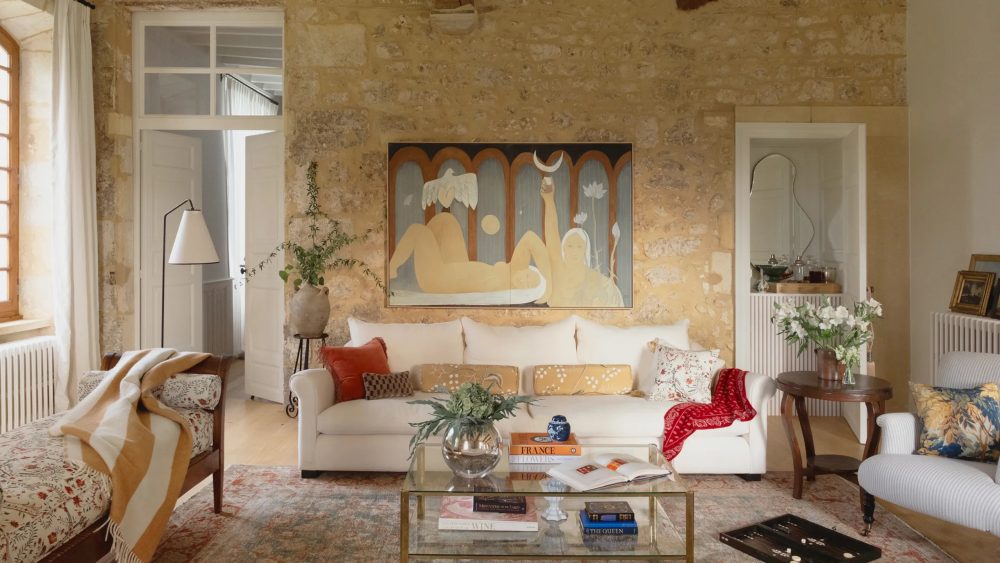
The renovation took about three years. During that time, the design team moved the house away from its farmhouse-inspired phase and closer to its Spanish roots. Wood ceiling beams helped restore architectural warmth, while saturated colors gave the interiors more weight and personality.
Color now does much of the talking. Plum-toned kitchen cabinets create a dramatic center for the home, while pink, aubergine, burgundy, and earthy shades appear throughout different rooms. Instead of relying on beige to connect everything, Hale lets strong shades sit confidently beside one another.
The ‘Witchy’ Details Make the House Personal
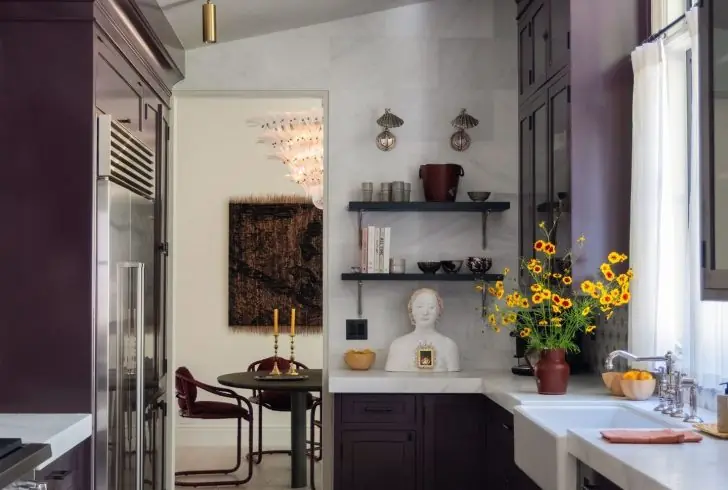
The rooms mix meaningful objects with items that seem chosen simply because Hale found them funny or beautiful.
A meditation room brings that combination into sharp focus. The peaceful space contains an altar and objects connected to Hale’s spiritual practice. Vintage McDonald’s toys also make an appearance, adding the kind of odd personal detail that would probably disappear from a more polished celebrity interior.
The entrance sets a similar tone before guests reach the main rooms. Hale wanted something that would immediately command attention, and the foyer includes an Austin Heyman artwork. A life-size sheep sculpture adds another dose of surreal humor to the space.
Even the front door carries meaning. Its pomegranate details reference abundance, setting a symbolic note at the entrance. Inside, stained glass, unusual furnishings, rich fabrics, and personal objects continue that layered feeling without forcing every room to follow the same formula.