
Measles is making a troubling comeback in the United States. By August 14, 2026, the Centers for Disease Control and Prevention had confirmed 2,566 cases nationwide, the highest annual total in more than 35 years. That number has already passed the 2,289 cases recorded during all of 2025. The rise matters for another reason because the United States could lose the measles elimination status it has maintained since 2000.
Elimination does not mean that measles never appears in the country. Travelers can still bring the virus into the United States. The key question is what happens after it arrives and how long the same chain of transmission continues.
For more than two decades, vaccination and outbreak control stopped imported cases from restoring continuous domestic transmission. The outbreaks that began in 2025 and continued into 2026 have put that record under intense pressure.
Measles Cases Have Reached a 35 Year High

Cases have continued climbing since then. By August 14, the national total had reached 2,566, showing that the July figure was not the end of the outbreak. The continued spread has kept public health officials focused on communities where vaccination coverage remains low.
The virus is especially good at exploiting those gaps. Measles spreads through the air when an infected person coughs, sneezes, or breathes. It is so contagious that one infected person can expose many susceptible people in a short period.
Children face particular concern during large outbreaks. CDC data from July showed that 69% of U.S. cases involved people aged 19 or younger. Among infected children under age five, about 10% had required hospitalization. The situation is not limited to one town or state. Cases have appeared across much of the country, while major outbreaks have driven large portions of the total. Earlier CDC data showed that 93% of confirmed 2026 cases were connected to recognized outbreaks.
Falling MMR Vaccination Leaves Larger Gaps
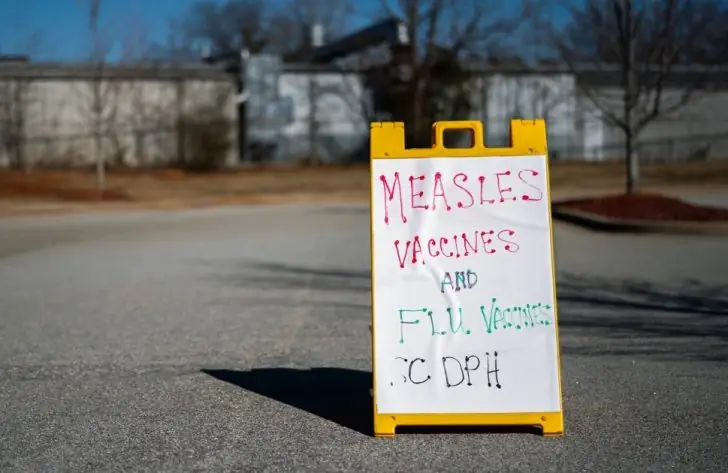
The CDC says community protection generally requires MMR coverage above 95%. U.S. kindergarten coverage stood at 95.2% during the 2019 to 2020 school year, but it had dropped to 92.5% by 2024 to 2025. The latest figures show that the slide has continued. MMR coverage among U.S. kindergartners fell to 92.4% during the 2025 to 2026 school year. That may sound close to 95%, but a few percentage points represent a large number of children without full protection.
National averages can also hide much larger local gaps. A state might report reasonably high coverage overall while individual counties, schools, or neighborhoods have far lower rates. Measles can spread rapidly when it reaches one of those pockets.
Vaccine exemptions are adding to the concern. The kindergarten exemption rate rose from 3.6% to 4.2% in the latest school year. Twenty-four states reported exemption rates above 5%, according to CDC data reported by Reuters.
Global conditions make those introductions more likely. PAHO reported rising measles activity across the Americas in 2026 and rated the regional public health risk as very high. The agency pointed to ongoing outbreaks, immunity gaps, and population movement as major concerns.
The U.S. Elimination Status Faces a November Review
The term “measles elimination” can be confusing because it does not mean every case has disappeared. A country maintains elimination when endemic transmission is no longer established and imported cases do not create continuous spread lasting at least 12 months.
The United States achieved that status in 2000 after decades of vaccination sharply reduced measles transmission. Now investigators are studying outbreak links, virus sequencing, and other evidence to determine if continuous transmission has returned.
PAHO has already described the U.S. position as “sustained elimination with major concerns.” Its July situation report recorded 2,318 U.S. cases through epidemiological week 29 and noted continuing transmission. The Regional Verification Commission plans to review the elimination status of the United States and Mexico in November 2026.